

Made by hand in London, shaped by the coast
I’m Suzannah, the maker behind SJB Ceramics. I discovered clay during the COVID-19 pandemic and was hooked straight away. I bought a tiny electric wheel, threw my first pots on a stool in my kitchen, and drove them to a local studio to be fired. Today I work from my own home pottery studio, with a traditional electric kiln wired in by my dad, who is an electrician.
I love using my hands to make beautiful objects that become a special part of someone’s every day. In a fast-paced, mass-produced world, I hope each piece offers a small, grounding moment. Whenever you look at it or hold it, I’d like you to feel calm, close to nature, and connected to the hands that made it.

Inspiration
The coast
I spend my summers on the Devon and Cornish coast, sailing, swimming and surfing with friends and family. The colours and textures of the sea, the sand and the rocks find their way into my glazes.
Green spaces
Autumn and winter mean long walks through parks and forests in and around London with my Portuguese Water Dog puppy, Pão (Portuguese for “bread”). Those walks shape the quieter, earthier side of my work.
My aim is for every piece to feel simple, organic and beautiful, bringing a little of the outside into your home.
From clay to kiln
Every piece is made by hand in stoneware, either thrown on the wheel or formed by hand, and each one is one of a kind. It’s a slow process, and I enjoy every stage of it.
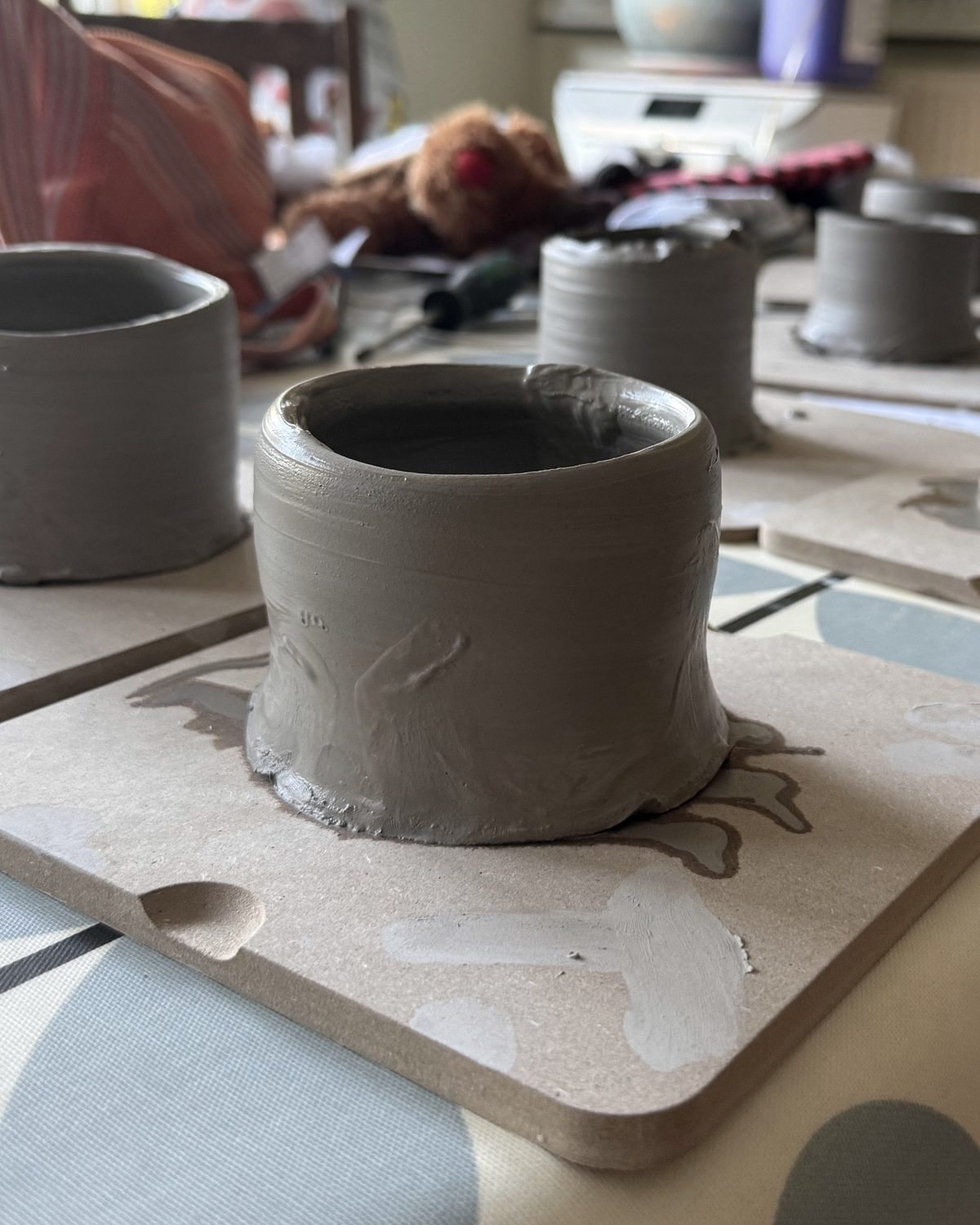
Freshly thrown 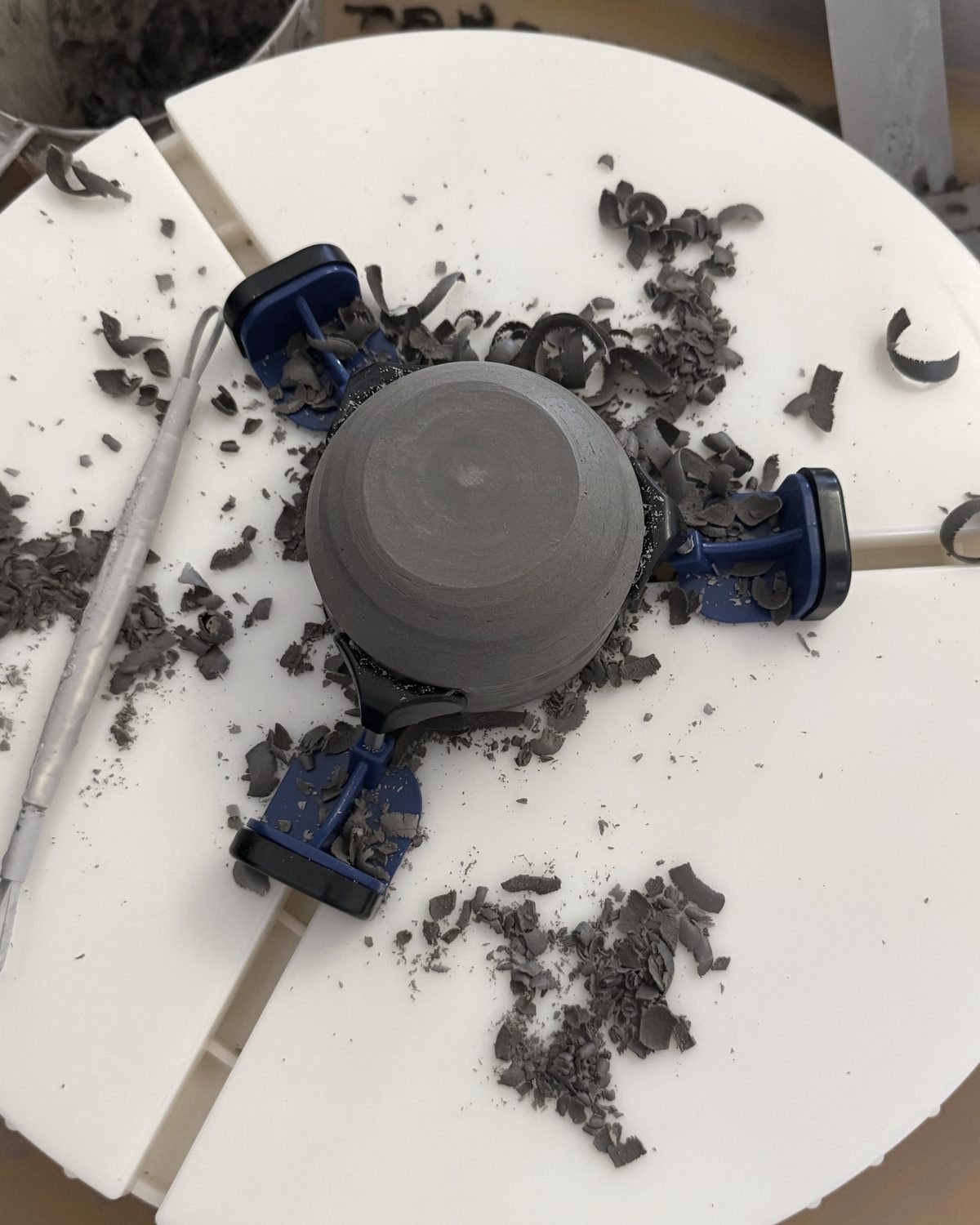
Trimming 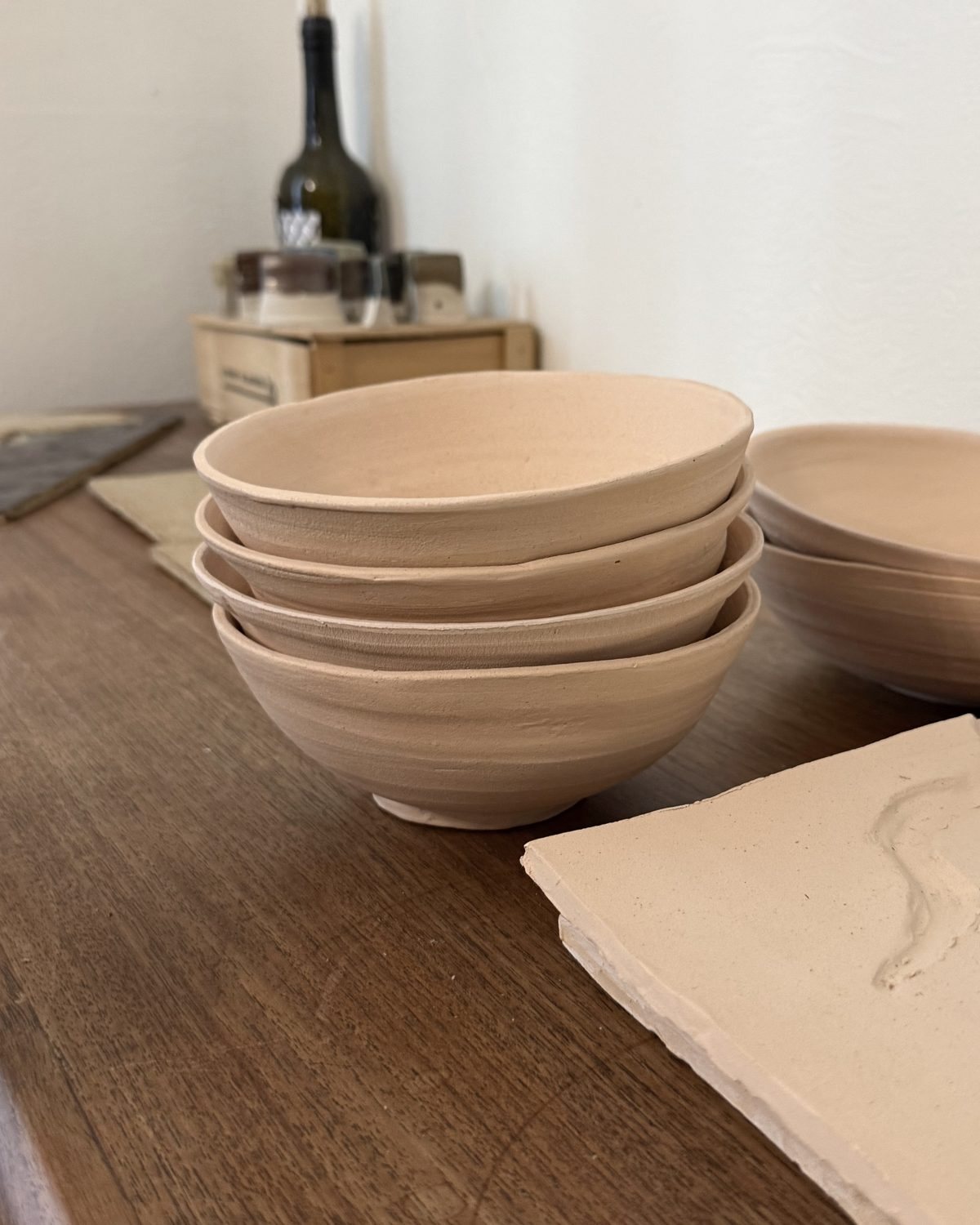
After the first firing 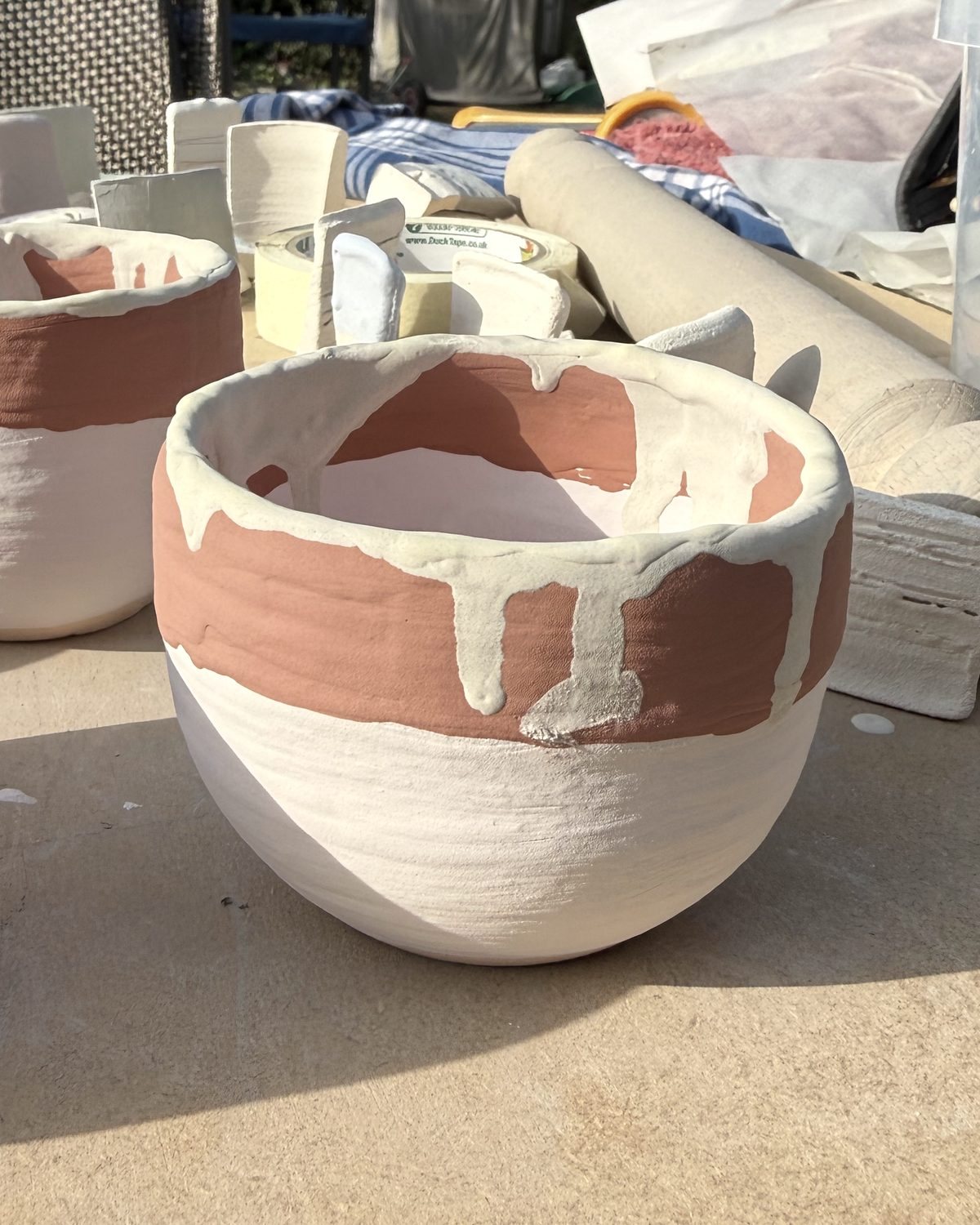
Glazing


- 01
Clay
Every piece starts as a block of stoneware clay.
- 02
Shaping
Pieces are thrown on the wheel or built by hand.
- 03
Trimming and drying
Thrown pieces are trimmed to refine their shape, which is one of the most satisfying parts of the process. Then they dry slowly. Drying can’t be rushed, and it slows life down a little.
- 04
First firing
The bisque firing takes about three days, including cooling, and turns the dried clay into ceramic.
- 05
Glazing
My favourite part. I use a range of glazing techniques. For the Coastal collection, I apply wax to the areas I want to keep bare, then dip each piece into the glaze for a few seconds. I fettle away any blemishes, but not too much, because I like each piece to keep its organic, unique character.
- 06
Glaze firing
The second firing reaches around 1,200°C, melting the glaze and fusing it permanently into the ceramic. It takes another three days. Opening the kiln once it has cooled is always exciting, especially when everything has gone well.